What has changed now that NFPA 660 has been issued?
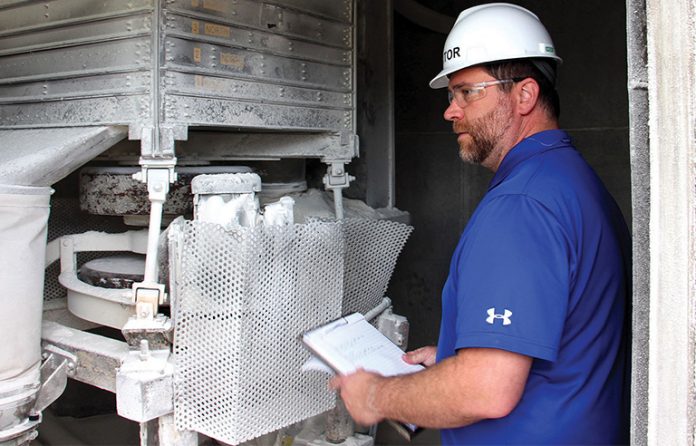
Responding is Jeff Davis, PE, senior explosion safety consultant, Fike, Blue Springs, MO.
NFPA 660: Standard for Combustible Dusts and Particulate Solids is a significant restructuring of the combustible dust standards by the National Fire Protection Association. With an effective date of Dec. 6, 2024, NFPA 660 consolidated the six commodity-specific combustible dust standards (NFPA 61, 484, 652, 654, 655 and 664) into a single comprehensive standard with the goal to simplify compliance and reduce confusion.
Before 2015, a facility handling combustible dust would use the commodity-specific (metals, sulfur, etc.) standard that applied to it. In some cases, a facility could have had more than one applicable commodity-specific standard. This could certainly cause confusion because of the differing requirements between the standards. With the first issuance of NFPA 652 in 2015, there was finally a fundamental combustible dust standard that applied to all facilities handling combustible dust.
However, this was just a baseline standard. A facility would still be subject to the commodity-specific standard(s) that applied to it as well. NFPA 660 is aimed at solving this issue.
The first 10 chapters of NFPA 660 are the fundamentals applying to all facilities. Although there are some changes in these chapters from NFPA 652, the chapters are similar and include hazard identification, the dust hazard analysis, management systems, and hazard prevention and mitigation.
A 10th fundamental chapter for emergency planning and response was added to the standard.
The commodity-specific standards start at Chapter 21 for agricultural and food processing, Chapter 22 for combustible metals, Chapter 23 for sulfur, Chapter 24 for wood processing and woodworking facilities, and Chapter 25 for combustible dusts and particulate solids not otherwise specified. These commodity-specific chapters include requirements that aren’t “fundamental” to all facilities but specific to the industry or commodity. These could replace or prohibit requirements found in fundamental chapters or could be in addition to those.
The core concepts from the previous standards are largely unchanged; they’re just structured and numbered differently. This included requirements in commodity-specific standards deemed fundamental being moved to Chapters 1-10 and removing fundamental requirements that appear in Chapters 1-10 from the commodity- specific chapters.
The definitions in Chapter 3 have been expanded to include those from all the standards, and each definition does identify which standard it came from. Plus, some new definitions have been added, such as for “management of change” and “operational readiness review.” Although MOC isn’t new to the fundamentals, it was never defined within the standard. The ORR, located in Chapter 8.12, is new to the fundamentals. The purpose of an ORR is to establish a pre-startup safety review before startup of new facilities and processes and for startup after shutdowns, both minor and extended.
With this new standard, a facility would be subject to Chapters 1-10 as well as its commodity-specific chapter. To use housekeeping as an example: Chapter 8.4 addresses housekeeping for all facilities, whereas Chapters 21.8.4, 22.8.4, 23.8.4, 24.8.4 and 25.8.4 provide additional housekeeping requirements that aren’t fundamental but specific to the applicable industry or commodity. Conflicts between fundamentals and commodity-specific requirements are addressed in Chapter 1.6.
For facilities that were already in compliance with NFPA 652 and their commodity-specific standard, NFPA 660 shouldn’t represent a radical change but should provide a more consistent and streamlined approach for managing combustible dust hazards. This streamlined approach is expected to improve with each NFPA 660 revision.
The first draft public comment period for the next edition, anticipated to be released in 2028, ended earlier this year. The first draft report is set to be posted on Oct. 28, after which second draft public comments can be made until Jan. 6.
McCraren Compliance offers comprehensive safety training to help prevent accidents. Visit our class calendar to see how our training and consulting services can enhance your safety efforts.
Original article published by Safety+Health an NSC publication