


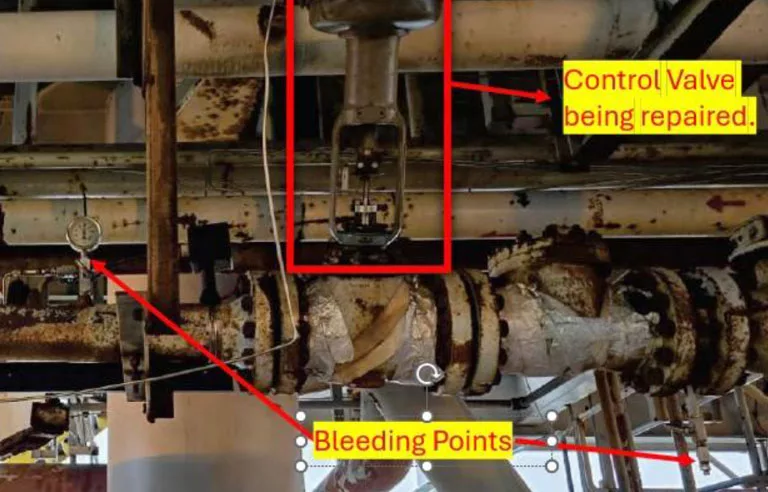
Photo: Bureau of Safety and Environmental Enforcement
Washington — Offshore oil and gas rig operators should ensure contractors review safety measures with qualified operations staff before working with pressurized systems or valves, the Bureau of Safety and Environmental Enforcement says.
In a recent alert, BSEE, which oversees safety for the offshore energy industry, details an incident in which a contract worker was injured and taken for treatment after a gas release.
The worker was performing maintenance on a gas line control valve when a sudden release of pressure occurred during removal and replacement of the valve trim and seat. A bonnet flange weighing around 50 pounds was ejected as a result. The flange struck the worker in the chest and abdomen, sending the worker backward onto an elevated scaffold platform.
An agency investigation found that the person in charge at the platform didn’t review or sign a job safety analysis, and the worker lacked knowledge of critical procedural requirements, including performing isolation checks to verify the gas line condition. Further, the worker started the job without the approval of the person in charge and worked without fall protection on a scaffold tagged “do not use.”
Among BSEE’s recommendations to operators and contractors:
- Regularly review incidents and share learnings with relevant personnel to raise awareness of hazards and contributing factors.
- Ensure JSAs are developed collaboratively and discussed to identify and mitigate possible hazards. Make sure JSAs have proper documentation and authorization before work starts.
- Ensure clear communication among the person in charge, operators and contractors.
- Implement additional safety barriers, such as caution tape, around unsafe scaffolding until a competent and authorized person approves its use.
- Adhere to fall protection requirements above 6 feet.
- Confirm zero energy state using double-block and bleed or equivalent methods before disassembling pressurized equipment.
- Follow original equipment manufacturer procedures for valve maintenance, disassembly and reassembly.
- Close energy isolation permits daily and validate before resuming work.
McCraren Compliance offers many opportunities in safety training to help circumvent accidents. Please take a moment to visit our calendar of classes to see what we can do to help your safety measures from training to consulting.
Original article published by Safety+Health an NSC publication