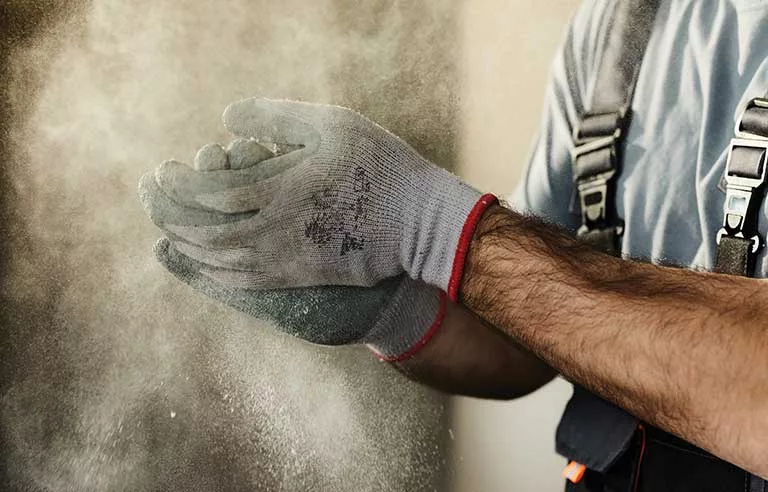
Gainesville, FL — Looking at how fast-moving airborne particles interact is part of ongoing research aimed at preventing combustible dust explosions.
Backed by an $11 million award from the U.S. Department of Energy’s National Nuclear Security Administration, the University of Florida’s five-year study includes artificial intelligence-assisted simulations involving “computing platforms that are more powerful than most supercomputers and designed to tackle complex scientific and engineering problems,” a press release from the university states.
The research group’s computer models, once developed, “can improve safety, including dust explosions in mines and silos,” lead researcher Sivaramakrishnan Balachandar, professor of mechanical and aerospace engineering at UF, said in the release.
The team, which also includes researchers from Purdue University and Georgia Tech, wrote in its proposal that the computer model “combines the powers of scientific computing and machine learning.”
Balachandar added that, by “focusing on the fundamentals and better understanding and modeling of group combustion, we plan to impact a wide variety of applications.”
McCraren Compliance offers many opportunities in safety training to help circumvent accidents. Please take a moment to visit our calendar of classes to see what we can do to help your safety measures from training to consulting.
Original article published by Safety+Health an NSC publication