

Photo: The Centers for Disease Control and Prevention/NIOSH
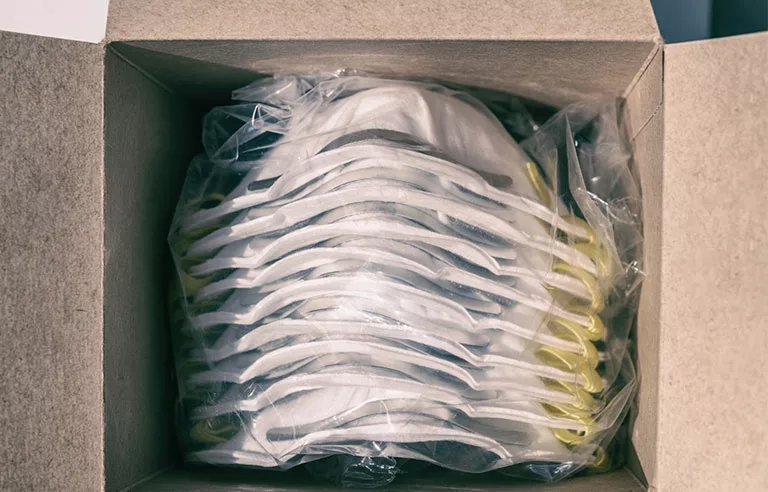
Washington — Having a stockpile of essential personal protective equipment is important for emergency situations, NIOSH says.
But how long will the contents of that stockpile remain effective? What can be done with respirators stored beyond a manufacturer’s recommended shelf life? And are shelf-life extension programs available for respirators?
In a recent blog post, NIOSH explores these questions and more to help employers avoid costs associated with replacing old PPE. The best practices are based on research that evaluated nearly 4,000 filtering facepiece respirators from 10 stockpile facilities across the country.
Whereas disposable FFRs, such as an N95 respirator, typically have a five-year shelf life, reusable respirators (elastomeric half-mask respirators and powered air-purifying respirators) are made up of subcomponents that may all have different shelf lives.
NIOSH recommends examining the manufacturer’s packaging or user instructions for shelf-life information, along with documenting shelf-life information and considering optimal rotation strategies, as part of a respiratory protection program.
As part of a documentation strategy, NIOSH advises keeping track of:
- Manufacturer/NIOSH approval holder name
- Model and/or part number for all components as applicable
- NIOSH Approval Number (84A-XXXX)
- Manufacturing date (may be included through the Lot Number)
- Lot and shelf life designated by the manufacturer
- Lot and shelf-life date for replacement filtering elements
- Lot and shelf-life date for facepiece (if designated)
- Shelf-life date and other applicable long-term storage considerations for batteries (if designated)
- Number of cases per model and units per case
- Total quantity
- Years purchased and/or years in storage
- Storage condition recommendations
Rotating inventory helps ensure respirator availability and product use within the optimized shelf lives. This also allows for a “first in, first out” approach.
NIOSH encourages checking the manufacturer’s instructions for storage recommendations. Many FFR models, for example, have “specific storage conditions of under 80% relative humidity.”
In general, OSHA says, respirators should be stored in original packaging and away from contamination, dust, sunlight, extreme temperatures, excessive moisture and damaging chemicals.
Although NIOSH can’t extend the shelf life of respirators on behalf of a manufacturer, the products can be used in instances where a NIOSH-approved respirator isn’t required. “Other options for products past their shelf life can include donation, disposal or recycling.”
Respirators without a shelf life should be regularly inspected.
McCraren Compliance offers many opportunities in safety training to help circumvent accidents. Please take a moment to visit our calendar of classes to see what we can do to help your safety measures from training to consulting.
Original article published by Safety+Health an NSC publication