Case report: #71-272-2025
Issued by: Washington State Fatality Assessment and Control Evaluation Program
Date of report: Nov. 11, 2025
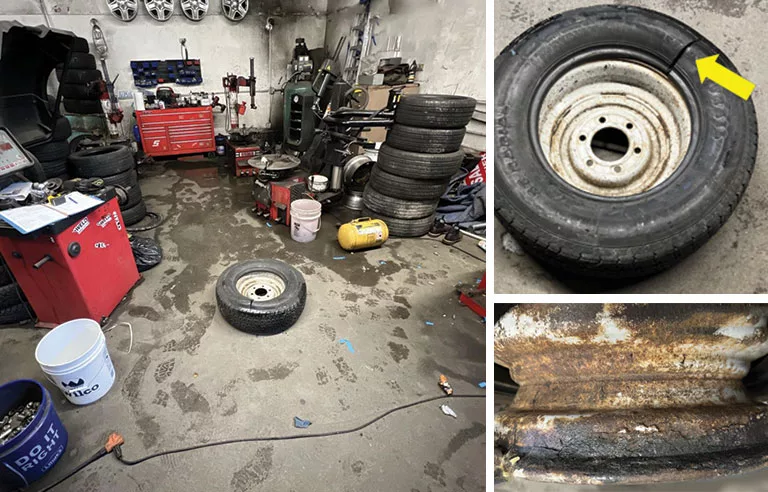
A technician had worked for his employer – a small, independent tire shop – for 10 years. The tires sold at the shop were bought by the employer from an auto salvage yard. On the day of the incident, the technician was mounting a used automotive tire on a single-piece spare trailer rim for a customer. The customer left the shop to get money. He returned 10 minutes later, went to the service bay where the technician was and saw him trying to put the tire on the steel rim. The technician placed the tire on the concrete floor and connected an air compressor line to it. He leaned over the tire and began striking it with a mallet to seat the bead on the rim. The tire exploded and, along with the rim, struck the technician’s face, neck and chest. It then hit the ceiling 20 feet above the floor. The customer, who also was knocked to the floor by the explosion, yelled for someone to call 911. Paramedics arrived and began to give aid, but the technician stopped breathing. The paramedics were unable to intubate him or give him oxygen because of severe injuries to his face, neck and throat. He was taken by ambulance to a hospital, then flown by helicopter to a trauma hospital, where he died the next day. Investigators found that the technician did not use a tire restraining device, such as an OSHA-compliant inflation safety cage, or secure the tire before inflating it. He inflated the tire above the manufacturer’s maximum air pressure of 40 pounds per square inch. (The air compressor tank was at 130 psi and did not have a pressure regulator.) In addition, the 14-inch tire and 14.5-inch rim were incompatible, the tire was 19 years old, and the bead seat of the rim was corroded. The employer did not have a written incident prevention program or documented training.
To prevent similar occurrences, employers should:
- Have technicians attend reputable, hands-on comprehensive tire service and safety certification training. Keep training documented and current.
- Demonstrate safety leadership. Show technicians how to use the proper equipment and procedures.
McCraren Compliance offers comprehensive safety training to help prevent accidents. Visit our class calendar to see how our training and consulting services can enhance your safety efforts.
Original article published by Safety+Health an NSC publication