


How do heat and humidity affect photoionization detection?
Responding is Justin Blackman, technical service manager, ION Science, Waterbury, VT.
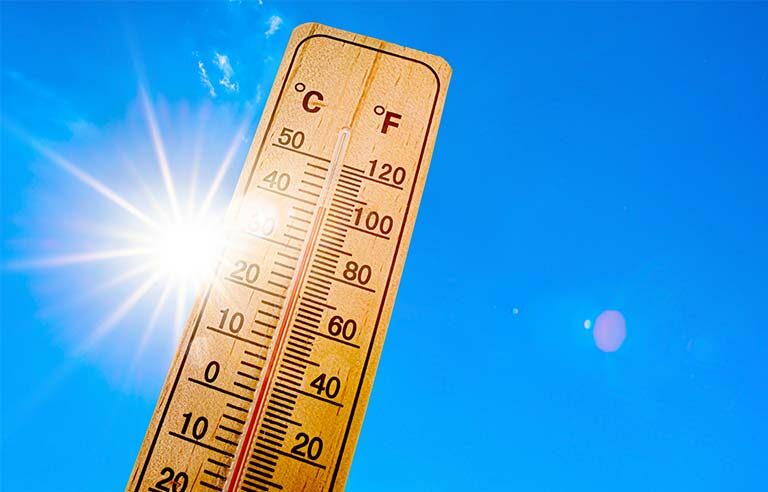
How do heat and humidity affect a photoionization detection, or PID, sensor? Let’s start by thinking about temperature and the volatile organic compounds we’re looking to detect and measure. As the air temperature rises, so does the vapor pressure of the volatiles. Therefore, the amount of VOC turning from liquid to gas increases. As a result, a PID instrument will show increased readings as temperatures rise.
Gasoline is a common example. On a cold day, a spill will stay in liquid form for a long time and not smell much. On a hot day, the gasoline will evaporate quickly and the smell in the air will be much greater. For everyday VOC detection, the readings will be accurate enough with weekly calibration. Only when extra accuracy is needed should the instrument be calibrated at the same ambient air temperature.
Now, we can look at humidity and how it affects readings. Many PID users will be aware of problems with humidity and traditional designs of the PID sensor. An invisible film of contamination forms on the lamp window, electrodes and walls of the detector. When presented with humid air, the layer of contamination becomes saturated and conductive. Users will see numbers slowly but steadily rise and, if the readings are zeroed, they’ll immediately see readings start to slowly tick up. The effect will be more pronounced if the detector hasn’t been cleaned recently and if the humidity is high. The only fix is to disassemble the detector and thoroughly remove the contamination with methanol. More modern PID sensors include a “fence electrode,” which almost completely removes these problem readings.
There’s also a secondary, but mostly unknown, effect as the humidity in the air rises. Water molecules in the sample will absorb the lamp energy, stopping the energy from acting on the volatile gases, which reduces the expected PID readings. The higher the humidity, the more energy is absorbed and the greater the drop in readings. It doesn’t matter how dirty or contaminated the detector is – the effect is repeatable as the humidity changes. The loss of reading can be significant, reaching a 50% drop. Imagine BTEX gases (benzene, toluene, ethylbenzene and xylene) are being detected and have an action level of 1 part per million. The instrument could be underreading and only showing 0.5 ppm. This is a potentially dangerous situation, depending on the BTEX gases present.
Looking carefully at the specifications of the PID instrument and thinking about testing how the PID instrument is actually performing is vitally important. Start with a freshly calibrated unit and a plastic water bottle. Make two holes in the screw cap, and fill the bottle a quarter full of water. Take the calibration gas tube and put it into the first hole, then push it all the way down under the water. As you turn on the calibrated gas, it will bubble through the water, picking up as much moisture as it can. Wait a few minutes before putting the probe of the PID instrument into the second hole in the cap. You’re now reading calibration gas at close to 100% humidity. Take note of the readings for over a minute or so to acquire an accurate sample. How much lower is the humid reading compared with the dry calibration gas concentration? Are you happy with a PID that underreports by this amount?
McCraren Compliance offers comprehensive safety training to help prevent accidents. Visit our class calendar to see how our training and consulting services can enhance your safety efforts.
Original article published by Safety+Health an NSC publication