Watertown, SD — Communication tower workers must cooperate with jobsite safety auditors and implement all recommended corrective actions, a safety resource from NATE: The Communications Tower Infrastructure Association says.
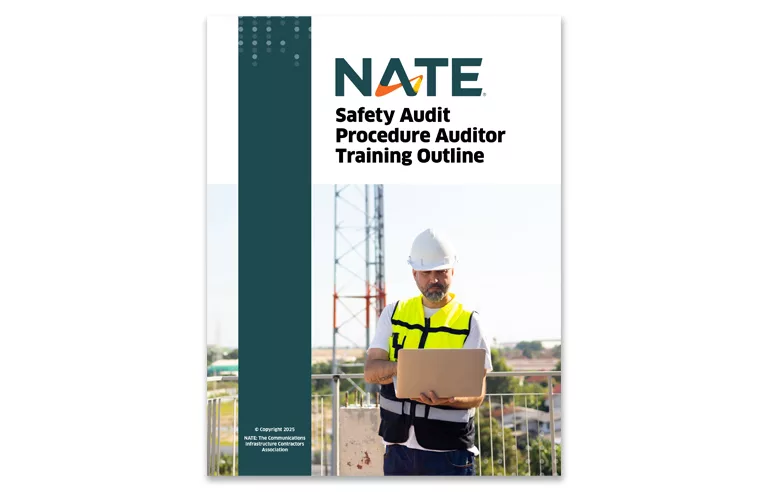
NATE recently published a guide that explores auditing procedures and responsibilities. It’s intended to be used as a training aid to “promote compliance, risk mitigation and a proactive safety culture.”
NATE recommends employers:
- Establish and maintain safety policies and procedures that meet applicable regulations and consensus standards.
- Provide training, resources and protections for employees, including stop-work authority and antiretaliation measures.
- Assign owners and timelines for corrective actions and ensure verification is completed with evidence.
Workers should:
- Comply with employer safety policies, procedures and safety requirements.
- Provide auditors with requested documentation, participate in inspections and demonstrate safety practices.
- Offer feedback for continuous improvement.
The audit process consists of planning and conducting, holding a closing meeting, reporting and follow-up, and verifying corrective actions.
Guidance for auditors:
- Define objectives, scope and success metrics.
- Use approved checklists.
- Confirm with the site crew the scope of work and review the Job Hazard Analysis and construction plan.
- Be mindful of ongoing work progress, especially during critical junctures or when crews are facing time constraints for completion.
- Perform a walkthrough to confirm work conditions and controls align with employer policy and current regulations and standards.
- Monitor work practices. When feasible, use drones for elevated inspections.
- Summarize audit findings and preliminary conclusions, highlighting strengths and areas for improvement.
- Solicit crew input, questions and feedback to inform future audits.
- Assign clear responsibility for corrective actions and give defined timelines.
- Confirm completion with documented evidence by the safety officer or supervisor.
McCraren Compliance offers comprehensive safety training to help prevent accidents. Visit our class calendar to see how our training and consulting services can enhance your safety efforts.
Original article published by Safety+Health an NSC publication