


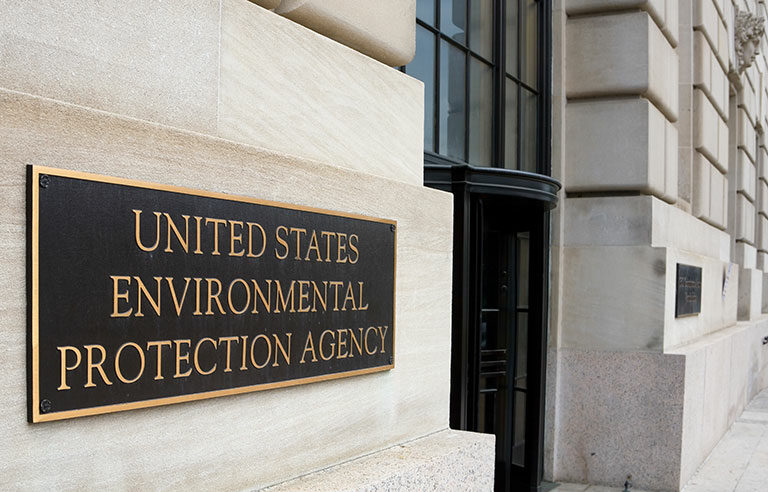
Washington — The Environmental Protection Agency will develop risk management rulemaking for 1,3-butadiene after finding that the substance used to make car tires, adhesives and paints meets the agency’s criteria for “unreasonable risk” in certain work situations.
In a final risk evaluation published Jan. 5, EPA says 1,3-butadiene – a colorless, flammable gas used to manufacture polymers such as plastic and synthetic rubber – presents unreasonable risk to workers under 11 conditions. Among them:
- Domestic manufacture and import
- Processing as a reactant in manufacturing adhesives, synthetic rubber, and paints and coatings
- Processing – incorporation into formulation, mixture or reaction product – plasticizer (asphalt paving, roofing and coating materials manufacturing)
- Repackaging (wholesale and retail trade fuel, synthetic rubber manufacturing, petrochemical manufacturing)
- Recycling
- Disposal
The agency also found that the substance, which is classified as a human carcinogen, doesn’t pose unreasonable risk to the environment or those living near facilities that use 1,3-butadiene.
An EPA press release says the review process lasted six years and allowed for around 20,000 scientific studies related to 30 different use cases. It adds that rulemaking “will give companies clear regulatory certainty while providing workers with necessary protections.
“Our safeguards will be tough and practical. We will ensure the protections we put in place are workable, taking additional action if new science emerges or conditions change.”
Under the Toxic Substances Control Act, EPA must issue within one year a proposed risk management rule for the substance and publish a final rule within two years.
McCraren Compliance offers many opportunities in safety training to help circumvent accidents. Please take a moment to visit our calendar of classes to see what we can do to help your safety measures from training to consulting.
Original article published by Safety+Health an NSC publication