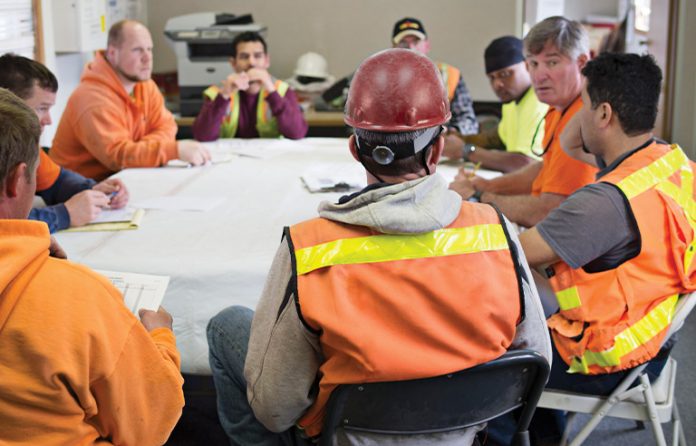
It’s been two years since Safety+Health last conducted a survey on safety training.
Once again, we asked readers to share information that would help us paint a picture of the safety training landscape.
The result: Charts that include information on how much organizations spend by size, whether training budgets increased or decreased (and why), the types and timing of training, and who delivers it.
And as always, readers gave their thoughts on the challenges they face around delivering safety training, the lessons they’ve learned with time and experience, and successes large and small. We’ve shared a sampling with you.
We know that safety pros juggle many demands for their time and attention, so we’re grateful to everyone who paused to complete the survey. Your input is genuinely appreciated.
Click to zoom in and cycle through the survey results:

You said it …
We wanted to hear from safety professionals about their experiences with delivering worker training. So, we asked: “What is your greatest challenge regarding worker safety training? What mistakes have you made regarding worker safety training? Any successes? What lessons have you learned?” Here, in their own words, are some of the responses.
Challenges
- Having upper management support and buy-in, as well as getting employees to attend. Trainings are not mandatory.
- Aiming for 100% training goal for all workers in a fast-paced manufacturing environment.
- Supervisors that do not think that safety is as important as production.
Refreshing the same training they had last year on the same subject so that it is interesting enough to stick. - Finding new and engaging methods of instruction and training time.
- Communicating in different languages. We have over 15 languages.
- Providing training that is specific to the work done in each department.
- Getting field crews to buy in.
- Meeting the needs of a variety of learner experience levels without boring the more experienced learners.
Mistakes made – and lessons learned
- Scheduling too many trainings in one day. I keep each training class as short as possible in hopes of keeping everyone engaged.
- Not giving older employees in-class option.
Expecting everyone can read. In manufacturing, that isn’t always the case. Have adapted the training to be verbal and written, to reach everyone. - Translation errors.
- Don’t do it before a holiday.
- Showing too many videos. Having a better balance between videos, verbal instruction and time for open discussions. Spending too much time going over the mistakes and not enough time on what is working well, has improved, etc.
- I have learned to reinforce the information. Tell them what you are going to tell them.
- Tell them the information. Tell them what you told them.
- Even when employees are familiar with a subject, regular refreshers are essential.
- Assuming all employees learn the same way. Approaching from multiple perspectives is more effective than staying siloed in one perspective.
Successes
- Employees making suggestions to safety policies based on training and specific worksite conditions.
- Being able to translate materials for all staff.
- Feedback is always positive and employees love the hands-on experience.
- Capturing good catch/near-hit and sharing data/stories across the organization.
- Staff knowing the proper procedures well enough and why to make the safest decisions on their own.
- Over the past 2.5 years, our safety culture has made a 180-degree turnaround for the better. Employees practice and maintain safety at the forefront of their work duties and responsibilities. Management is involved and engages with the employees in safety practices, training, discussions, meetings and more.
- Starting to see a better safety culture/positive-minded involvement in being safe.
- Hearing/sharing positive comments from plant floor employees all the way up to COOs.
- Other sites now use some of my training materials.
- I have excellent relationships with most everyone at my company and they not only listen but come to me for advice.
McCraren Compliance offers comprehensive safety training to help prevent accidents. Visit our class calendar to see how our training and consulting services can enhance your safety efforts.
Original article published by Safety+Health an NSC publication