What are the benefits of air sampling compared with real-time instruments for dust monitoring?

In the United States, workplace air monitoring falls under OSHA’s regulatory framework, with sampling and analytical methods commonly drawn from NIOSH methods and long-established industrial hygiene practices.
This is where the core benefit of personal, pump-based air sampling shows up most clearly. Real-time dust monitors are incredibly useful tools. However, when it comes to compliance, personal sampling pumps are the gold standard and the anchor for which legislation and permissible exposure limits are based.
Air sampling is built for OSHA-style compliance decisions
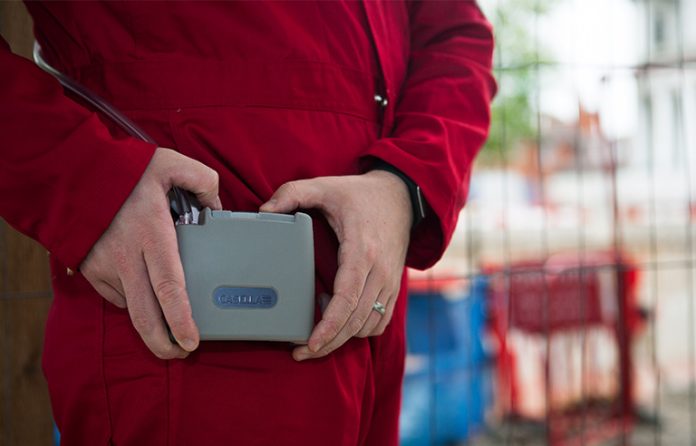
Personal sampling pumps are designed to measure an employee’s exposure in their breathing zone over a defined period – often over an eight-hour shift. This is so the result aligns with how OSHA exposure limits are typically evaluated (time-weighted averages). A properly selected sampling train (correct cassette/cyclone, filter media, flow rate and run time per an accepted method) produces a defensible concentration based on a known volume of air.
Real-time instruments estimate concentration based on how particles scatter light, ideal for showing the “when” and “where” exposure may have occurred, to help you decide on implementation of control measures. But when you’re making measurements to ensure controls are effective and measure residual risk, accuracy is key.
Lab analysis provides better specificity
Dust isn’t composed of one substance. Even in the same facility, particle size, shape and composition can vary by task, material or process. The advantage of collecting a filter sample is that you can send it to a laboratory for sensitive, method-based analysis, which provides a true mass concentration.
This is especially important when the purpose of dust monitoring is to identify the concentration of a hazardous component within the dust – respirable crystalline silica being the classic example. A real-time, body-worn monitor can’t reliably assess how much of the dust is the specific hazard identified unless it’s paired with a validated approach. An example is metals in a dust, such as that in a foundry. Real-time methods can reveal when the dust is highest but can’t tell you what composition of the dust is the most toxic and its metal components.
Integrated sampling represents true shift exposure
Workplace dust exposures are rarely steady, as they spike during drilling, sawing, cutting or maintenance before settling in periods of lesser activity. Air sampling pumps average this variance into one exposure number over the sampling period, which more accurately matches the reality of how you manage risk.
Real-time data is excellent for identifying peaks and linking them to tasks, but it can also tempt people into overreacting to short spikes or, conversely, dismissing meaningful exposure because the numbers fluctuate.
Cost-effective and repeatable for programs, not just spot checks
Method-driven sampling is founded in compliance and critical when demonstrating that controls are working as intended and exposures are being managed over time.
Real-time monitors are appropriate tools for troubleshooting, source identification and immediate feedback. But from an OSHA perspective, the key benefits of air sampling are defensibility and alignment with exposure limit evaluation. A combination of real-time and gravimetric measurement can give the best of both in real-world applications.
McCraren Compliance offers many opportunities in safety training to help circumvent accidents. Please take a moment to visit our calendar of classes to see what we can do to help your safety measures from training to consulting.
Original article published by Safety+Health an NSC publication