What role does ergonomic design play in retaining an aging industrial workforce?

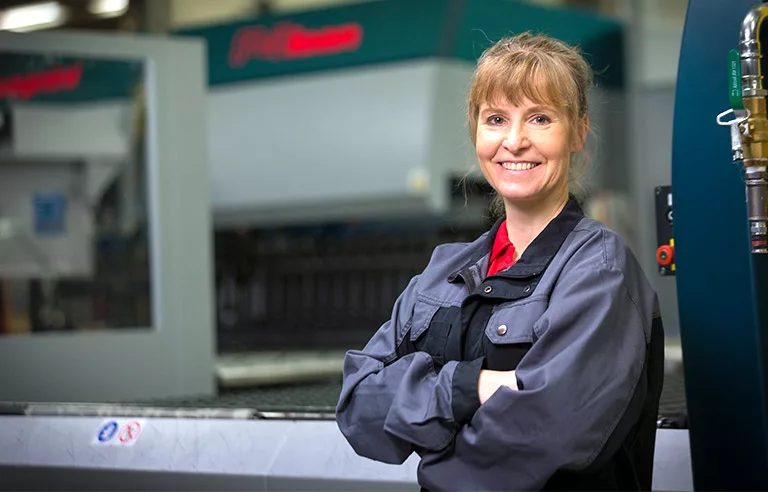
Responding is Jonna Patama, ergonomist and product group manager, Treston USA, Canton, GA.
Industrial workplaces across the United States are in the middle of a demographic shift that’s reshaping how organizations think about safety, productivity and long-term staffing. More Americans are working later in life, and experienced employees are staying on the job longer because the labor market continues to tighten. At the same time, many manufacturers, warehouses and utilities are struggling to attract enough new hires to replace those nearing retirement.
This means one thing: U.S. companies are becoming more dependent on their most experienced workers. Retaining them is no longer just a safety priority. It is a business-critical strategy.
Why aging workers face higher ergonomic risk
Musculoskeletal disorders remain one of the largest drivers of lost workdays in American industry. According to the Bureau of Labor Statistics, MSD cases account for nearly a third of all lost-time injuries.
As workers age, natural physical changes can increase strain during repetitive, forceful or awkward tasks. These changes often include:
- Reduced muscle strength
- Slower recovery
- Decreased flexibility
- Changes in balance and mobility
- Declining visual acuity
In environments that rely on lifting, reaching, bending, standing or fine visual work, these changes can make certain tasks more demanding. If the job isn’t designed to accommodate that variation, older workers are more likely to experience discomfort or injury. Recovery times also tend to be longer, which increases the risk of permanent restrictions or early departure from the workforce.
Losing experienced workers costs more than open positions
When a seasoned employee leaves, organizations lose far more than a pair of hands. They lose the kind of tacit knowledge that keeps operations running smoothly: how to spot defects early, troubleshoot issues and maintain line stability. Replacing that capability can take years and significantly increases training and supervision needs.
Turnover costs in industrial settings often include:
- Overtime or temporary labor
- Training time for new hires
- Declines in quality or throughput during ramp-up
- Higher workers’ compensation costs when inexperienced workers face injury risks
This is why ergonomics should be seen not just as a safety function, but as a direct investment in workforce stability, expertise and uptime.
How ergonomic design supports longer, healthier careers
Ergonomics aligns job demands with human capabilities. When workplaces are designed to fit a wide range of abilities, employees of different ages can contribute effectively without compromising their health.
Practical improvements that support aging workers include:
Adjustable and adaptable workstations. Height-adjustable benches, lift tables and sit-stand options reduce the need to work in awkward postures and help employees maintain neutral positions throughout the day.
Optimized reach and material flow. Bringing parts, tools and inventory within the optimal reach zone reduces shoulder and back strain. Presenting items at the right angle also improves accuracy and reduces fatigue.
Mechanical assists and handling tools. Carts, hoists, conveyors and tool balancers reduce the force required to move materials. These tools help aging workers stay productive even as strength naturally declines.
Enhanced visual ergonomics. Adjustable lighting, improved contrast and better screen positioning support precision tasks and compensate for age-related vision changes.
Better work-rest structure. Breaking up repetition, rotating tasks and pacing high-exertion work gives older employees adequate recovery time and reduces cumulative strain.
The business case for ergonomic investment
Operational data consistently supports ergonomic improvements:
- Reduced recordable injuries
- Lower workers’ comp and insurance costs
- More consistent quality and throughput
- Higher retention and lower absenteeism
- Greater engagement, especially among long-tenured workers
In a tight labor market, these factors can be the difference between meeting production goals and falling behind.
A workplace that supports older workers also becomes more attractive to younger talent. It signals that the company values safety, invests in modern tools and designs work around real human needs.
Preparing U.S. industry for the future
Ergonomics doesn’t change the aging process. It removes the barriers that prevent experienced workers from staying productive and healthy. As the American workforce continues to age, the organizations that thrive will be those that adapt work to the worker, rather than the other way around.
The question for leaders is no longer whether ergonomic design is worth the investment. The real question is what it will cost if they don’t make it.
McCraren Compliance offers many opportunities in safety training to help circumvent accidents. Please take a moment to visit our calendar of classes to see what we can do to help your safety measures from training to consulting.
Original article published by Safety+Health an NSC publication